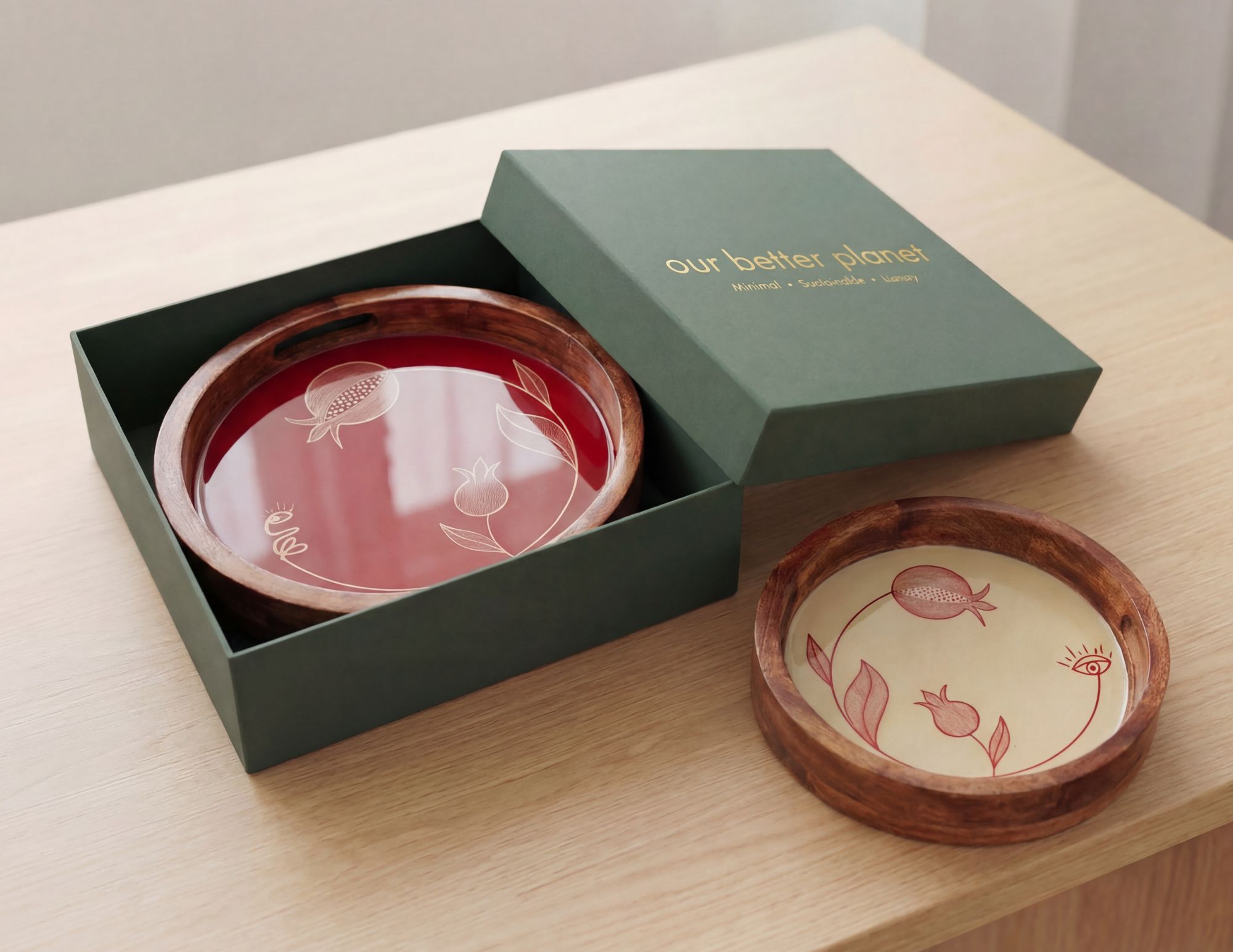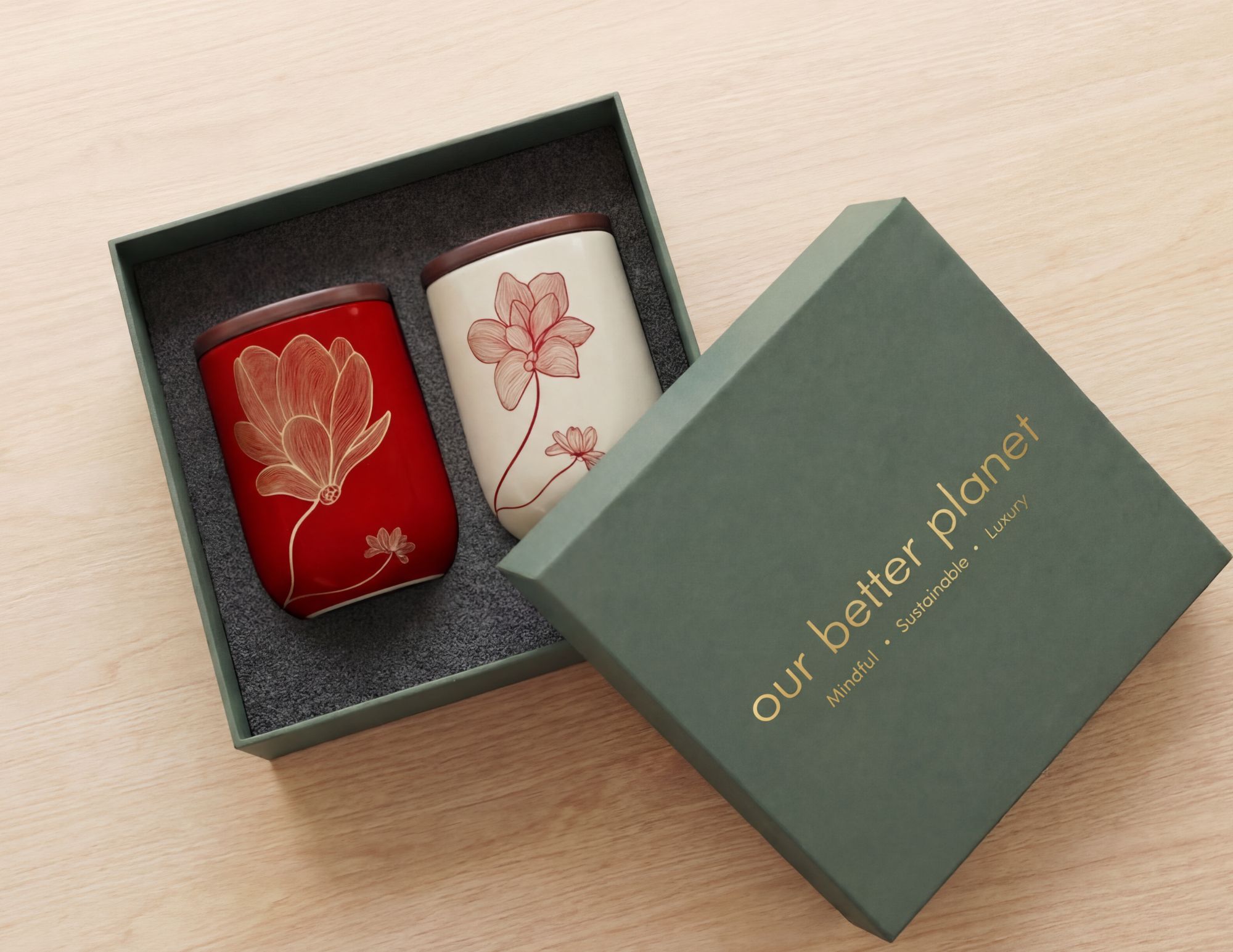


A sustainable gift hamper is one built around handmade, verifiably sourced products — not just wrapped in recycled paper. The fastest way to choose the right one is to start with three questions: who is it for, what's the occasion, and what's your budget. This guide walks through how to answer each of those and what to actually look for so the hamper holds up to scrutiny, not just the label.
What Makes a Hamper Genuinely Sustainable
Before comparing options, it helps to know what sets an eco-friendly hamper apart from one that just uses the term. A sustainable hamper should be able to answer, for most of what's inside:
-
Who made it — a named artisan, cooperative, or social venture, not an anonymous "eco brand."
-
What it's made of — specific materials (organic cotton, terracotta, upcycled fabric, natural dyes), not a vague "eco-friendly" claim.
-
How it's packaged — biodegradable, reusable, or minimal packaging, since a hamper wrapped in plastic cellophane undercuts everything inside it.
This is also the simplest test for spotting greenwashing: if a hamper description can't tell you the material or the maker, it's likely leaning on the word "sustainable" as decoration rather than substance.
Step 1: Start With the Occasion
Different occasions call for different hamper compositions — an occasion-first approach narrows the field faster than browsing by product type.
Festive & Seasonal Gifting
Diwali, Rakhi, and regional festivals call for hampers built around shared, celebratory items — sweets or pantry treats, a decor piece, a small textile or personal-care item. These tend to skew warmer in tone: terracotta diyas, hand-poured candles, or a small brass accent piece alongside food items.

Personal Milestones
Birthdays, anniversaries, housewarmings, and weddings call for more individually chosen items — something that reflects the recipient's taste rather than a general "crowd-pleasing" mix. A housewarming hamper, for instance, leans toward home items (a handwoven table runner, ceramic dinnerware, a scented candle), while an anniversary hamper might follow a traditional theme like cotton, wood, or copper.

Corporate & Bulk Gifting
Onboarding kits, client hampers, and festive corporate gifting need a different lens entirely — consistency across many recipients, clear customization options, and lead times that match a company's ordering calendar. If you're sourcing at scale, jump to the corporate section below before anything else.

Step 2: Set a Realistic Budget
Sustainable and handmade doesn't have to mean expensive, but budget does shape what's realistically achievable. As a rough guide:
|
Budget range |
What you can typically include |
|
Under ₹1,000 |
A single well-made item plus a small pantry or personal-care add-on |
|
₹1,000–₹2,500 |
A curated 3–4 item hamper — decor or personal-care piece, pantry item, textile accent |
|
₹2,500–₹5,000 |
A fuller hamper with a statement piece (larger decor, tableware set) plus supporting items |
|
₹5,000+ |
Premium, multi-category hampers, often used for corporate or milestone gifting |
Setting the budget first, before browsing products, keeps a hamper from becoming a collection of unrelated add-ons chosen just to fill space.

Step 3: Choose the Composition
A well-composed hamper usually mixes categories rather than repeating one:
-
One "anchor" item — the piece the recipient will notice first, whether that's a decor object, a textile, or a wellness product.
-
One consumable or pantry item — teas, snacks, or organic pantry staples give a hamper something to actually use up, which many recipients appreciate alongside items they'll keep.
-
One smaller accent — a candle, a set of coasters, or a small personal-care item that rounds out the mix without overwhelming the budget.
This mix-and-build approach — choosing category by category rather than picking a pre-set box — also makes it easier to personalize a hamper to someone's actual taste instead of defaulting to a generic bundle.

Choosing for Corporate & Bulk Orders
Corporate gifting has its own set of practical questions on top of everything above:
-
How far ahead should you order? For any bulk or customized hamper, start the process at least 3–4 weeks out — longer around major festivals, when production and shipping windows tighten.
-
Can hampers be branded or personalized? Many partner-made hampers support light branding (a card insert, ribbon color, or custom note) even when the products themselves are made by independent artisans — check this before assuming full customization is available.
-
What's the minimum order quantity? This varies by hamper composition; simpler, single-category hampers tend to have lower minimums than multi-item boxes.
-
How does it frame CSR or ESG goals? A sustainable, artisan-made hamper naturally supports employee gifting programs with a sustainability or social-impact angle, since every item traces back to a named maker or cooperative — useful context to include if the gifting decision needs sign-off from a sustainability or CSR team.

A Quick Pre-Checkout Checklist
-
Does the listing name the material and maker for each main item?
-
Is the packaging itself reusable or biodegradable, not just the products inside?
-
Does the hamper composition actually suit the occasion and the recipient, or was it chosen mainly by price point?
-
For bulk orders — is there enough lead time before the actual gifting date?
Frequently Asked Questions
What's the difference between a sustainable hamper and a regular gift hamper?
A sustainable hamper is built from products with traceable sourcing — named makers, specific materials, and verifiable impact credentials like handmade, biodegradable, or cruelty-free — rather than generic mass-produced items bundled together.
Can I build my own hamper instead of choosing a pre-set one?
Yes — many sustainable gifting platforms let you select individual products and combine them into a custom hamper, which is often the better route if you want the mix to match a specific person or occasion rather than a general theme.
How much lead time do I need for a bulk corporate hamper order?
Plan for at least 3–4 weeks for standard bulk orders, and 6–8 weeks around Diwali or year-end, when demand and customization requests both peak.
Is handmade always more expensive than mass-produced?
Not necessarily at every price point — a well-chosen single handmade item can cost less than a multi-item mass-produced gift set, though very intricate artisan techniques do carry a premium that reflects the labor and skill involved.
The Takeaway
Choosing a sustainable gift hamper comes down to working occasion, budget, and composition in that order — and checking that what's inside can actually back up the word "sustainable" with a name, a material, or a process. Done that way, a hamper stops being a generic gesture and becomes something the recipient can trace back to an actual maker.
Ready to build one? Browse the Festive Hamper collection for ready-made options by occasion, or explore Corporate Gifting for bulk and customizable hampers with clear lead times.